For many neurodivergent folks, especially those navigating ADHD, sensory sensitivities, anxiety, or executive dysfunction, getting dressed can be surprisingly stressful. Clothes scratch. Tags stab. Waistbands dig. Patterns overwhelm. Laundry piles multiply like mischievous house spirits. And don’t even get me started on outfit decision-making (hello, 27 discarded shirts on the floor). But here’s the good news: you can build a wardrobe that feels soothing, supportive, and aligned with your energy.
One that reduces decision fatigue, honors your sensory needs, and still lets your style feel magical, expressive, and deliciously you.
Here’s how to create a neurodivergent-friendly wardrobe that works with your brain instead of against it.
Start with your sensory needs (your body will tell you the truth)
Neurodivergent bodies speak loudly…we just learn to ignore them.
So first, tune in:
-
What fabrics make you want to sigh with relief?
(Cotton, bamboo, modal, linen, jersey, fleece?) -
What fabrics make your skin crawl?
(Poly blends, wool, anything “structured”?) -
What closures annoy you?
(Buttons? Zippers? Hooks? Bra clasps?) -
What sensations shut your brain down?
(Tight waistbands, scratchy seams, stiff collars?)
Make a “YES fabric list” and a “NO fabric list.” This alone can change everything.
Create clothing zones based on energy, not occasions
Most wardrobes are organized into occasions (“work,” “gym,” “nice dinner”). Neurodivergent wardrobes thrive when organized into states of being.
Try zones like:
-
Low-spoon outfits: soft, stretchy, tagless, cozy, no decisions needed.
-
High-energy/creative outfits: flowy layers, bold prints, expressive accessories.
-
Comfort-professional outfits: polished silhouettes in comfy fabrics.
-
Outdoor/grounding outfits: breathable, natural fibers, layers for temp changes.
This meets your brain where it actually IS, moment to moment.
Choose a color palette that calms (or activates) you
Some neurodivergent folks need quiet, low-contrast colors to avoid overstimulation. Others get energized by rich jewel tones or earthy, witchy hues.
Choose 5–8 “core colors” that:
-
Make you feel grounded
-
Go with each other without thinking
-
Fit your energetic or aesthetic vibe
This makes mixing and matching effortless and drastically cuts down decision fatigue. Think of it like choosing the aesthetic of your personal RPG character.
Build a “comfort capsule” for hard days
Every neurodivergent wardrobe needs a dedicated section for tough moments. These are your rescue garments.
Include:
-
The softest shirt you own
-
Leggings or joggers with a non-tight waistband.
-
A sensory-friendly bra (or no bra options)
-
A cozy cardigan or oversized hoodie
-
A dress that feels like pajamas
-
Warm socks or slippers that don’t squeeze
- If you prefer tighter clothing because it creates a swaddling effect, find the right tightness and softness of fabric that works for you
When your executive function is flatlining, these save the day.
Eliminate sensory triggers before they reach the closet
Do a sensory audit of each item:
-
Cut tags immediately
-
Use a seam ripper to remove scratchy threads
-
Wash new clothes with fabric softener or a baking soda rinse
-
Keep a “softening spray” (water + conditioner) for stiff fabrics
-
Replace buttons with snaps or elastic if needed
-
Use waistband extenders if tightness is an issue
A neurodivergent wardrobe is crafted as much as it is curated.
Reduce decision fatigue with outfit formulas
Outfit formulas = your new best friend.
A formula could look like:
-
Leggings + long tunic + cardigan
-
Soft joggers + fitted tee + denim jacket
-
Maxi dress + drapey sweater
-
Black pants + stretchy top + statement necklace
Make a few formulas you love and repeat them endlessly.
Repetition is not boring; it’s regulating.
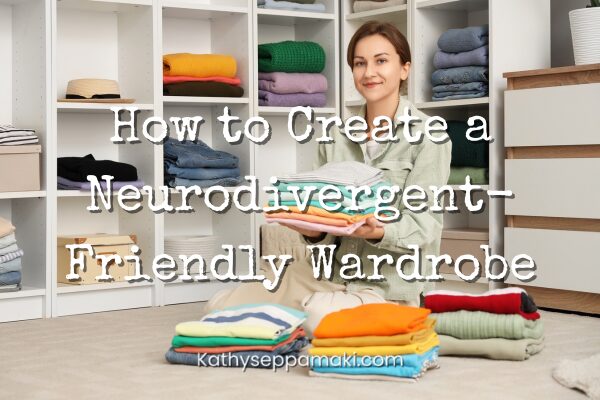
Keep your closet visible and brain-friendly
Executive dysfunction and object permanence issues can make clothes disappear forever if they’re out of sight.
Try:
-
Open shelving
-
Clear bins
-
Hanging organizers
-
Rolling carts
-
Labels with words and pictures
-
A small “in rotation” rack for current favorites
Out of sight = out of mind, and out of mind = never worn.
Let your style reflect your spirit (because comfort doesn’t have to be bland)
You’re a midlife wild woman. A sensory-sensitive creative soul. Your wardrobe can hold both comfort and creativity.
Try incorporating:
-
Flowing skirts
-
Soft fabrics in mystical hues
-
Earthy layers
-
Textures that feel like they came from the forest
-
Jewelry that’s lightweight and sensory-friendly
-
Pockets (bless the pockets)
Neurodivergent-friendly does not mean boring or utilitarian. It means regulated, expressive, aligned.
Build a “laundry light” wardrobe
Laundry is a huge executive function hurdle, so design with that in mind:
-
Choose fabrics that can air out between wears
-
Stick to items that wash and dry easily
-
Have duplicates of favorites
-
Keep a small laundry basket in multiple rooms if needed
-
Store “worn but not dirty” clothes on hooks instead of chairs (chair piles are sneaky chaos gremlins)
Your wardrobe should support your real life, not your idealized life.
Let yourself evolve
Bodies change. Brains change. Seasons of life change. Your wardrobe is not a static thing, it’s a living ecosystem.
Give yourself permission to release clothes that don’t feel good today, even if they once did.
That’s not wasteful. It’s honoring your current self.
Your wardrobe can be a safe place
Creating a neurodivergent-friendly wardrobe isn’t just about clothes. It’s about nervous system regulation. It’s about making daily life smoother. And it’s about honoring your sensory needs and your spirit at the same time.
And most importantly:
It’s about choosing comfort without apology.
When your clothes feel good, your energy comes back. Your creativity awakens. Your confidence expands. And your days begin to feel a little softer, a little easier, a little more you.