If you’re neurodivergent and dealing with sensitive digestion, chances are food has become…complicated.
Some days you’re hungry, but nothing sounds safe. Some days, textures feel wrong, smells feel loud, and even “healthy” foods feel like too much. And some days, the idea of cooking at all is more overwhelming than the digestion itself.
This isn’t a failure of discipline or planning. It’s your nervous system asking for ease.
When digestion is sensitive, simple is not lazy. Simple is supportive.
What makes a meal neurodivergent-friendly?
For sensitive digestion, meals work best when they are:
-
Low in sensory overload (smell, texture, complexity)
-
Easy to digest
-
Predictable and familiar
-
Warm and grounding
-
Quick or low-effort to prepare
These are not “diet rules.” They’re nervous system accommodations.
Gentle meal foundations (mix & match)
Instead of rigid recipes, think in soft building blocks you can rotate based on energy and tolerance.
Easy proteins
-
Shredded chicken (slow cooker or rotisserie)
-
Soft-scrambled or hard-boiled eggs
-
Baked or canned salmon
-
Turkey meatballs
-
Plain tofu if tolerated
Gentle carbs
-
White or jasmine rice
-
Mashed or baked potatoes
-
Sweet potatoes
-
Oatmeal
-
Rice noodles
Soothing vegetables
-
Steamed carrots
-
Zucchini
-
Green beans
-
Spinach (cooked, not raw)
-
Squash
Cooked vegetables are often easier on sensitive digestion than raw ones—especially during burnout or stress.
Comforting fats
-
Olive oil
-
Butter or ghee
-
Avocado (if tolerated)
-
Coconut oil in small amounts
Simple meal ideas (no overthinking required)
These aren’t fancy. That’s the point.
Chicken, rice, and gentle veggie
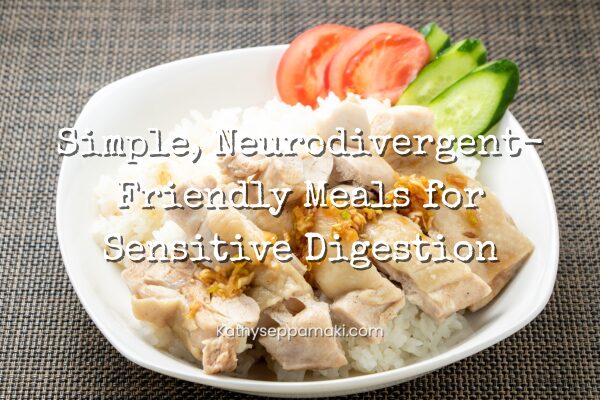
Shredded chicken over rice with steamed carrots or zucchini. Add olive oil and salt. That’s it.
Egg & potato bowl
Soft-scrambled eggs with roasted or mashed potatoes. Add a little butter and sea salt.
Oatmeal for any time of day
Plain oats cooked with water or a milk alternative. Add cinnamon, a little honey, or mashed banana if tolerated.
Soup is a nervous system hug
Chicken soup, bone broth with rice, or blended vegetable soups are often easier to digest when everything else feels like too much.
Salmon & sweet potato
Baked salmon with a soft sweet potato. Simple, grounding, nourishing.
Neurodivergent-friendly cooking tips
Repeat meals without guilt
Eating the same safe foods over and over is regulation, not failure.
Use shortcuts freely
Frozen veggies, rotisserie chicken, pre-cooked rice—these are accommodations, not cheating.
Eat smaller portions more often
Large meals can overwhelm a sensitive gut. Gentle grazing can be easier.
Eat warm foods when possible
Cold foods can be harder on digestion, especially when stressed.
Stop eating before you’re “too full”
Neurodivergent interoception can make fullness hard to read. Slightly less is often easier on the gut.
When “healthy” foods aren’t helpful
Salads, raw vegetables, protein bars, and highly fibrous foods are often praised in wellness culture. But they can be brutal on sensitive digestion.
If your body feels better with warm, simple, familiar foods, that is healthy for you.
Healing isn’t about following food rules. It’s about listening.
Food as regulation, not control
For neurodivergent people, food is never just fuel.
It’s sensory input, emotional safety, and nervous system regulation.
Especially in midlife, when our bodies are asking us to slow down, simplify, and soften.
You don’t need to fix your digestion by trying harder.
You support it by creating safety…on your plate and in your life.
And sometimes the most healing meal is the one that feels calm, quiet, and kind.