Skip to content

Recent Posts

  • Slow Cooker Beef and Butternut Squash Stew
  • AuDHD and the Holidays: Why They Can Be So Hard, And How to Navigate Them Gently
  • What To Do When Your Sensory Sensitivities Are Triggered
  • Self-Care for the AuDHD Soul
  • Slow-Cooker Turkey Breast

Most Used Categories

  • Neurodivergence (23)
    • AuDHD (8)
  • Neurodivergent Friendy Recipes (14)
    • Low Spoon Recipes (12)
    • Slow Cooker (5)
  • My Journey (6)
  • Mindset (19)
  • Self-Love (7)
  • Self-Care (6)
  • Stress (4)
Skip to content
Kathy Seppamaki

Kathy Seppamaki

Finding Myself In Midlife

  • Home
  • Life and Home
    • Food
    • Herbs
    • Kitchen
  • Midlife
    • Menopause
  • My Journey
    • About Me
  • Neurodivergence
    • AuDHD
    • Neurodivergent Tools
    • Sensory sensitivities
  • Neurodivergent Friendly Recipes
    • Beverages
    • Breakfast
    • Dessert
    • Instant Pot
    • Lunch
    • Main Dish
    • Salads
    • Side Dish
    • Slow Cooker
    • Soups and Stews
  • Wellness
    • Energy
    • Health
    • Mindset
    • Self-Care
    • Self-Love
    • Sensuality and Sexuality
    • Stress
    • Women’s Issues
  • Home
  • Neurodivergence
  • Why Nature Is a Refuge for Neurodivergent Minds
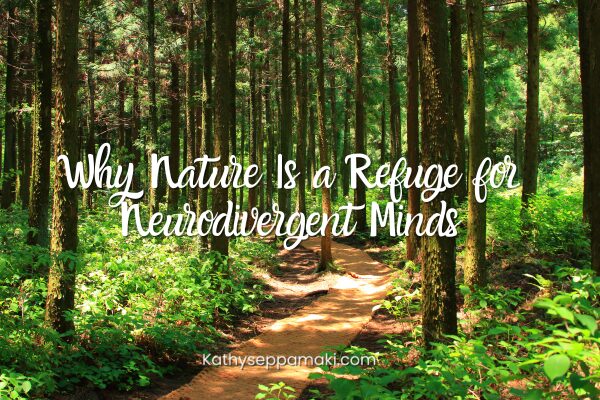
Why Nature Is a Refuge for Neurodivergent Minds blog post title with picture of a forest path

Why Nature Is a Refuge for Neurodivergent Minds

kathyseppamakiJuly 9, 2025November 15, 2025

Have you ever felt a deep exhale the moment you step outside? Like your whole body finally gets to unclench. You aren’t alone. There are so many people who experience this when they go out into nature. For neurodivergent people (like me), nature can be more than just a pretty backdrop. It can be a refuge. A grounding, healing space that welcomes us just as we are.

Here’s why spending time in nature can be especially powerful for neurodivergent brains:

Nature soothes the senses

The neurodivergent mind is constantly being bombarded with an overwhelming amount of external information and stimulation. It’s no wonder, then, that neurodivergent people struggle with chronically dysregulated nervous systems. Their senses are constantly being overloaded! The natural world is full of calming sensory input: the rustle of leaves, birdsong, the smell of rain, the warmth of sunlight on your skin. Unlike artificial environments that can be harsh, loud, or overwhelming, nature tends to offer gentle, rhythmic stimulation—perfect for sensory regulation.

It helps with focus (especially for ADHD brains)

Natural green spaces support attention in a magical way. There’s a concept called soft fascination, a mental state in which you interact with stimuli that gently hold your attention without demanding it. Soft fascination allows your mind to rest and is restorative. Being outside can give our brains a break from overstimulation and actually help improve focus and executive function.

Boosts mood and regulates emotions

Spending time in the sunlight and fresh air, and getting out and moving in the great outdoors, all contribute to increased serotonin and dopamine levels. These are the feel-good chemicals that are often out of balance in neurodivergent folks. So a dose of nature can feel like an emotional reset. We all need more nature in our lives, but those with sparkly brains definitely benefit from a little “Vitamin N” regularly!

You don’t have to mask in the forest

When you’re out in the woods, there’s no pressure to make small talk, follow social rules, or suppress your stims. You can move your body, talk to yourself, walk in circles—whatever feels good. No need for masking here! Trees don’t judge. Nature lets you just be.

It meets sensory-seeking needs

For sensory-seekers, nature is a dream. The crunch of leaves underfoot, the warmth of the sunshine on your skin, the feel of the breeze through your hair, cool water on your hands, or the textures of rocks, bark, and soil can offer safe and satisfying ways to meet sensory needs—no fidget toy required.

Encourages mindfulness without forcing it

Mindfulness doesn’t always have to look like sitting still with your eyes closed. Watching clouds, listening to birds, or observing how sunlight shifts through the trees can gently anchor you in the present moment—no meditation app needed.

Fosters creative freedom and play

Whether you’re following a winding trail or building something with sticks and stones, nature invites you to explore and encourages you to use your imagination. It gives you space to follow your curiosity in a way that’s often stifled in structured environments.

Reduces anxiety and overwhelm

Even a brief time in nature can lower cortisol (the stress hormone). It provides a gentle contrast to the often chaotic sensory and emotional input of daily life, giving the nervous system a much-needed break. This helps to reduce the anxiety that can be such a present issue for so many people who are neurodivergent!

A loving reminder

You don’t have to “do nature” a certain way. You don’t need hiking boots or a remote mountain trail. A quiet park, a tree-lined sidewalk, or even sitting by a potted plant in the sun counts.

Nature is for you, exactly as you are—beautiful, brilliant, and uniquely wired.

  • Click to email a link to a friend (Opens in new window) Email
  • Click to share on Facebook (Opens in new window) Facebook
  • Click to share on Pinterest (Opens in new window) Pinterest
  • Click to share on X (Opens in new window) X
  • Click to share on LinkedIn (Opens in new window) LinkedIn
  • Click to share on Reddit (Opens in new window) Reddit
Why Nature Is a Refuge for Neurodivergent Minds

Post navigation

Previous: The Benefits of Self-Diagnosing Autism
Next: How Living Simply Benefits Neurodivergent People

Related Posts

You're Not Lazy, It's Executive Dysfunction blog post title with a picture of a distressed woman standing in front of her kitchen sink looking at the pile of dirty dishes that need to be cleaned.

You’re Not Lazy, You Have Executive Dysfunction

October 26, 2025October 19, 2025 kathyseppamaki
Why Late Diagnosis Feels Like Both a Relief and a Grief blog post title with picture of a middle aged woman sitting and looking concerned

Why Late Diagnosis Feels Like Both a Relief and a Grief

October 22, 2025October 22, 2025 kathyseppamaki
The Hidden Exhaustion of Masking: Top Signs You’re Hiding Your Neurodivergence blog post title with picture of a woman sitting on the ground, leaning against a wall with her head in her hands.

The Hidden Exhaustion of Masking: Top Signs You’re Hiding Your Neurodivergence

October 15, 2025November 15, 2025 kathyseppamaki

Leave a Reply Cancel reply

Your email address will not be published. Required fields are marked *

Recipe Rating


Hi, I’m Kathy!
I discovered I’m autistic and ADHD (AuDHD) in midlife—right in the thick of menopause and a full-on identity unraveling. Now, I’m on a journey to unmask, heal, and rediscover who I really am. This blog is where I share the messy, magical path of being neurodivergent in midlife, and finally coming home to myself.

  • Facebook
  • Instagram
  • YouTube
  • TikTok

Welcome to Kathy Seppamaki- Finding Myself At Midlife!

Sign up for my newsletter below!

The AuDHD Aha Moment That Changed My LifeThe AuDHD Aha Moment That Changed My LifeMarch 26, 2025kathyseppamaki
The Top Neurodivergent-Friendly Cooking ToolsThe Top Neurodivergent-Friendly Cooking ToolsJuly 30, 2025kathyseppamaki
The Best Tea for LaryngitisThe Best Tea for LaryngitisFebruary 12, 2025kathyseppamaki
Copyright All Rights Reserved | Theme: BlockWP by Candid Themes.