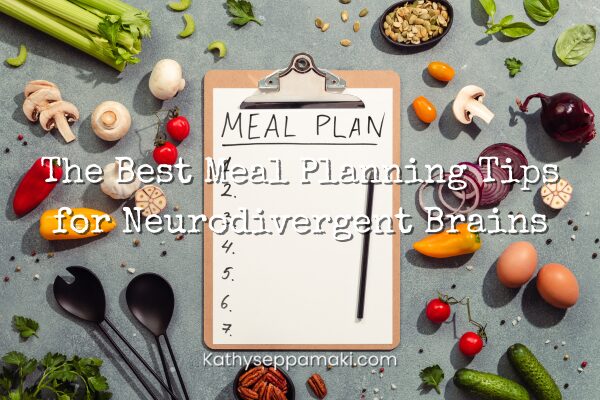
Meal planning is supposed to make life easier…but if you’re neurodivergent, it can just as easily become another overwhelming mountain of steps, decisions, and “Why am I like this?” moments.
If you struggle with executive dysfunction, decision fatigue, sensory sensitivities, or just the sheer boredom of repetitive tasks, traditional meal planning methods may not work for you, and that’s okay. Neurodivergent brains often thrive with different approaches.
Here are the best AuDHD-friendly, neurodivergent-friendly meal prep strategies that actually work with your brain, not against it.
Embrace the “minimum viable meal plan”
Forget the Pinterest-perfect containers and 12 identical meals. Your brain doesn’t need that. What you need is the smallest amount of prep that pays you back the biggest amount of energy later.
This might look like:
-
Chopping veggies for the next 1–2 days (not the whole week)
-
Cooking a protein you can throw into multiple meals
-
Prepping breakfast only because mornings are the hardest
Think of it as micro-prep. Small energy now, big relief later.
Use the “two-step meal” method
Many neurodivergent folks abandon cooking halfway through because the process feels endless.
A two-step meal fixes that:
-
Prep the base (protein, grain, roasted veggies) ahead of time
-
Assemble a meal in under 5 minutes when you’re actually hungry
Examples:
-
Cook chicken ahead → make tacos, salads, wraps, bowls
-
Make a pot of rice → add frozen veg + sauce = done
-
Roast a big tray of veggies → mix with pasta, eggs, soup, whatever
Your brain gets the satisfaction of “easy win” meals without the overwhelming task-switching of full cooking.
Choose meals that are low-spoon by design
Some meals require too many steps, too much cleanup, or too many sensory inputs. Give yourself permission to prioritize low-spoon meals, such as:
-
Sheet pan meals
-
Slow cooker or Instant Pot meals
-
Wraps and bowls
-
Smoothies
-
Pre-made salads with a simple protein added
-
Breakfast-for-dinner
For neurodivergent adults—especially in midlife—simplicity isn’t laziness. It’s a strategy.
Visual meal planning > written meal planning
Traditional lists can feel abstract and not stimulating enough. Try visual tools:
-
A magnetic meal board
-
Sticky notes on the fridge
-
A photo album on your phone titled “Meals I Actually Eat”
-
Dry-erase board with 5–10 go-to meals
This reduces decision fatigue and keeps your brain engaged. Bonus: You can move sticky notes around when plans change.
Stop forcing variety if your brain doesn’t want it
Neurotypical people may crave variety. Neurodivergent people? Many of us love safe foods, comfort meals, and predictable tastes.
Eating the same 5–10 meals on rotation is not boring…it’s efficient and soothing.
Your meal prep will be faster, simpler, and more successful if you stick to what works rather than what you “should” eat.
Use “done-for-you” helpers without shame
Store-bought shortcuts are your friend, not a moral failure:
-
Pre-cut veggies
-
Rotisserie chicken
-
Frozen meals you can customize
-
Pre-cooked rice
-
Jarred sauces
-
Shredded cheese
If it reduces friction, it belongs in your kitchen.
Prep in “zones,” Not tasks
If task-switching is hard, try prepping by zones:
-
Cutting zone: chop everything you need
-
Cooking zone: stove or oven tasks
-
Assembly zone: container filling
-
Cleaning zone: one final sweep at the end
This reduces the mental load of constantly shifting gears.
Keep the bar lower than you think
Meal planning doesn’t need to be:
-
pretty
-
organized
-
color-coded
-
gourmet
-
Or all done at once
Sometimes meal planning is:
-
washing grapes
-
boiling eggs
-
making sure you have snacks
-
prepping tomorrow’s lunch
-
cooking rice
-
getting takeout and portioning it into two meals
Everything counts.
Use tools that feel like “cheats” (in the best way)
If a gadget saves you spoons, it is worth its weight in gold:
-
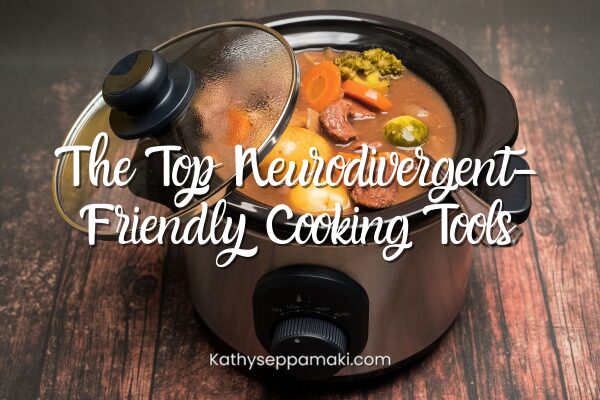
Slow cooker
- Instant Pot
-
Air fryer
-
Veggie chopper
-
Rice cooker
-
Electric kettle
-
Sheet pans
-
Pre-seasoned cast iron
The easier the cleanup, the better the tool. The Instant Pot and slow cooker are by far my two favorites. And you can get liners for the slow cooker to make cleanup even easier!
Prep when you’re in a hyperfocus window
Hyperfocus is a gift, when you catch it.
If you find yourself suddenly energized, use that window to:
-
batch cook
-
chop everything
-
restock snacks
-
prep sauces
-
portion out leftovers
This creates “future you” wins. Just set timers so you don’t burn things while hyperfocusing.
Pre-portion snacks to prevent decision fatigue
If you struggle with impulsive eating or forgetting to eat, try snack prep:
-
small yogurt cups
-
cheese sticks
-
washed fruit
-
nuts in little containers
-
a “grab-and-go” shelf in the fridge
Make eating easy. Make feeding yourself easy.
Don’t meal prep alone
Body doubling isn’t just helpful for work, it’s incredible for cooking.
Try:
-
a virtual coworking meal prep session
-
meal prepping with a partner or friend
-
putting on a YouTube “cook with me” video
-
voice messages back and forth with a friend
Community reduces overwhelm and activates motivation.
Meal prep should support you, not stress you out!
If you’re neurodivergent, especially navigating midlife shifts and AuDHD realities, you don’t need a rigid system; you need flexibility, simplicity, and permission to do it your way.
Start small. Celebrate the wins. And build a meal prep routine that works with your beautiful, nonlinear brain.